
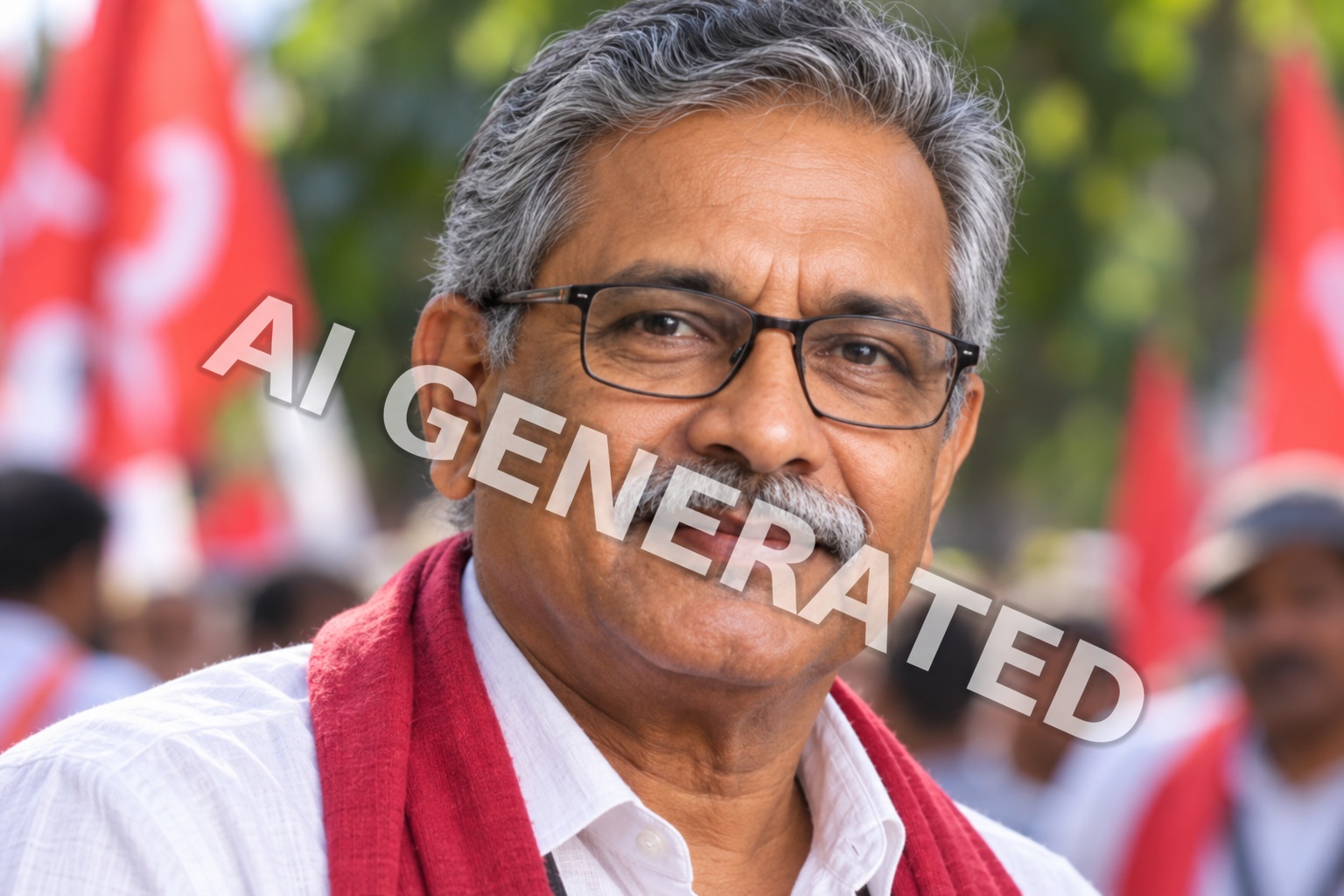
Trade Union Leader and Workers’ Welfare Organiser
K. Shafiq Rahman
Trade Union Leader and Workers’ Welfare Organiser
K. Shafiq Rahman has spent much of his public life working with employees in transport, small manufacturing and service-sector workplaces. His leadership developed through the practical concerns of workers who often needed help understanding workplace procedures, welfare provisions and the institutions through which their grievances could be addressed.
Fictional demonstration profile — created to show how a Jannayaks profile reads. It does not describe a real person.
Biography
Trade Union Leader and Workers’ Welfare OrganiserK. Shafiq Rahman has spent much of his public life working with employees in transport, small manufacturing and service-sector workplaces. His leadership developed through the practical concerns of workers who often needed help understanding workplace procedures, welfare provisions and the institutions through which their grievances could be addressed.
Shafiq began as a workplace volunteer before taking on responsibilities within a workers’ organisation. His early experience taught him that disputes were often intensified by poor communication. He therefore placed considerable emphasis on documenting concerns, speaking with workers individually and presenting issues collectively rather than allowing disagreements to become personal conflicts.
Over time, his responsibilities expanded to include welfare initiatives, assistance during workplace emergencies and awareness programmes on social-security benefits. He encouraged workers to understand the provisions available to them rather than depending entirely on office-bearers to intervene. Meetings were often organised in simple formats so that workers could ask questions without feeling that they needed specialist knowledge.
One of his continuing interests has been the welfare of workers whose employment is less secure. Contract workers, daily-wage earners and families affected by sudden loss of income often fall between formal systems of support. Shafiq has worked with local volunteers and community organisations to connect such families with available assistance and information.
His approach to collective leadership has also involved younger workers. He encourages them to participate in meetings, maintain records and learn how negotiations and representations are conducted. In his view, an organisation remains strong only when ordinary members understand how it works and are willing to take responsibility.
Shafiq’s contribution is therefore not limited to resolving individual workplace problems. He has helped create a culture in which workers are encouraged to know their rights, discuss their concerns collectively and approach institutions with greater confidence. His public life illustrates the role that organised worker leadership can play in strengthening dignity and participation in everyday economic life.
Profile reference · JN-KKR3N